
Pre-Symposium Workshops

The Pre-Symposium workshops are intended to provide a more concentrated learning experience where the faculty can focus on a topic in greater depth, and with more time for practical examples from clinical experiences. They are optional workshops with separate fee(s).
ACCREDITATION
The American Academy of Medical Acupuncture is accredited by the Accreditation Council for Continuing Medical Education to provide continuing medical education for physicians.
The American Academy of Medical Acupuncture designates Pre-Symposium Workshops I and II for a maximum of 7.5 AMA PRA Category 1 Credit(s)™ and Pre-Symposium Workshop III for a maximum of 4 AMA PRA Category 1 Credit(s)™. Physicians should claim only the credit commensurate with the extent of their participation in the activity.
To register to only attend a pre-symposium workhop, click the button below.
Symposium Information
“Applied Clinical Mastery in Medical Acupuncture: Advanced Pattern Differentiation & Specialized Techniques”
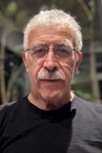 Presented by Francisco Lozano, MD, PhD Presented by Francisco Lozano, MD, PhD
This Applied Clinical Mastery in Medical Acupuncture: Advanced Pattern Differentiation & Specialized Techniques pre-symposium workshop is designed for physicians seeking to strengthen diagnostic precision and expand their repertoire of clinically effective procedural skills. The session begins with a targeted review of Traditional Chinese Medicine pattern differentiation, emphasizing its integration with biomedical assessment and its relevance to complex presentations. Building on this foundation, participants will explore a wide range of specialized acupuncture techniques—including fire needle, point injection therapy, catgut embedding, long-needle methods, acupotomology (knife-needle techniques), fascia- and collateral-channel–based needling, and others. Selected methods such as floating needle will be introduced briefly as part of the broader technical landscape. Each technique’s key indications, mechanisms, safety considerations, and clinical applications will be discussed. Demonstrations will offer practical insight and support confidence in translating these advanced methods into clinical practice. At the end of this workshop, attendees will be able to:
|
“Heart and Soul of Medical Acupuncture”
 Presented by Tate Kauffman, MD, FAAMA
Description:
A Pre-Symposium review of the principles and practices derived from the use of the Circulation of Energy (Heart) and the Five Phases (Soul) models, with hands on applications of the techniques, exercises in point location, and class generated case discussions.
Highlights Include:
- Circulation of Energy, +/- Curious Meridians
- Hands on, N-N+1, Distinct Meridians, Curious Meridians with Ion Pumping Cords
- Five Phases
- Hands on, Great American Malady, 4 needle technique
- Point location exercises
- Case discussions
At the end of this workshop, attendees will be able to:
- Identify the evidence-based used of the circulation of energy model in creating acupuncture treatments.
- Identify the evidence-based use of the five-phases model in creating acupuncture treatments.
- Administer techniques of both circulation of energy and five-phases models.
- Identify and needle the relevant acupuncture points to achieve the above
“Pragmatic Acupuncture in Any Setting”
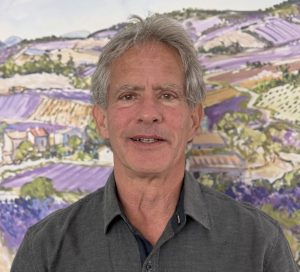
Presented by Michael Freedman, MD, FAAMA
Description:
This 4 hour workshop will provide an analysis of several pragmatic acupuncture treatments that may be quickly employed by physicians to treat pain syndromes in any setting. The anatomy of each condition being addressed will be discussed as well as the rationale for the choice of the specific treatment points. The presentation will include videos of patients before and after treatment. The economic impact of the painful conditions will be addressed as well as the repercussions of a physician leaving a patient untreated during a patient encounter. This workshop is ideal for medical acupuncture practitioners facing time and billing challenges, as well as for physicians curious about medical acupuncture who want to learn more about integrating medical acupuncture into any practice.
Learning Objectives
At the end of this workshop, attendees will be able to:
- Treat shoulder, elbow, hip and knee pain with one or two needles in a few minutes
- Distinguish between cervicogenic, migraine and TMJ causes headaches as well as the overlap and effectively treat each in a brief office encounter
- Apply the Yang Tong Dian treatment for cervical and Low Back Pain
- Treat plantar fasciitis with one needle and be comfortable explaining to the patient why the treatment is effective
- Discuss several possible mechanisms of action of Interosseous Membrane Stimulation and comfortably use the treatment to address distal extremity pain
Safety Information
The health and safety of our meeting attendees is our highest priorityof the AAMA. Participants, upon registration, acknowledge that they recognize the risks associated with attending and interacting with meeting attendees, staff, and others while participating in the AAMA Annual Symposium and acknowledge that AAMA is not liable for the spread or transfer of any virus, illness or injury for participants as a result of attending the AAMA Annual Symposium. Participants also acknowledge that participation in demonstrations or practical exercises during the meeting is voluntary and at participant’s own risk.